Root Canal Treatment
Your teeth are meant to last a lifetime. Years ago, diseased or injured teeth were usually pulled. But today, a tooth can often be saved through root canal (endodontic) treatment.
Endodontics (en-do-DON-tics) is the branch of dentistry that deals with treating diseases or injuries to the dental pulp. An endodontist is a dentist who specializes in root canal and other endodontic treatments.
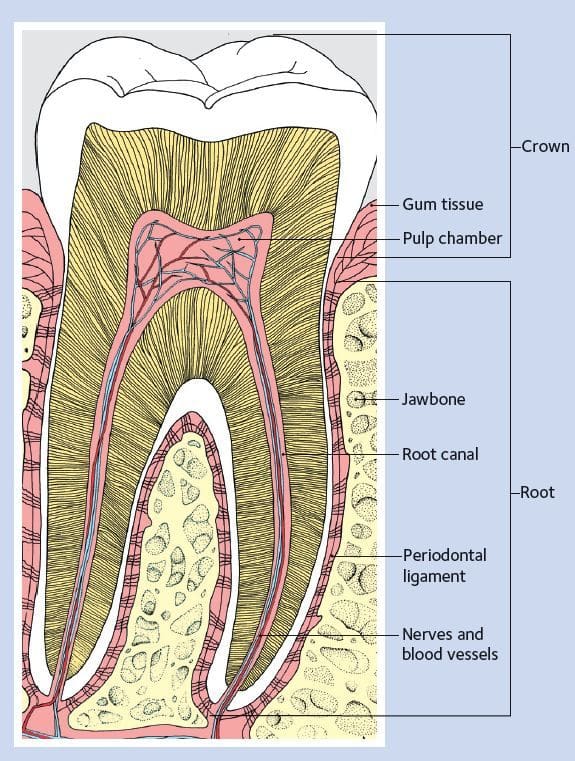
Diagram of a Healthy Tooth |
|
 |
|
What happens if the pulp is injured?
The pulp is soft tissue inside the tooth that contains blood vessels and nerves. When the pulp becomes inflamed or infected, treatment is needed. The most common causes of pulp inflammation or infection are a cracked or chipped tooth, a deep cavity or filling, or other serious injury to the tooth. All of these can allow bacteria to enter the pulp.
Why should the pulp be removed?
If damaged or infected pulp is not removed, the tissues around the root of the tooth can become infected. Pain and swelling often result. Even if there is no pain, bacteria can damage the bone that holds the tooth in the jaw. Without treatment, the tooth may have to be removed.
Removing a tooth can create problems
When a tooth is removed and not replaced, the teeth around it may shift. This can make biting and chewing difficult and may make it harder to clean your teeth. Areas that are not cleaned well are more likely to get gum disease.
Root canal treatment can prevent these problems by saving your natural tooth. Also, root canal treatment is usually less expensive than a replacement tooth.
What does treatment involve?
Root canal treatment may involve one or more dental visits. Your dentist or endodontist will perform the necessary steps to save your tooth:
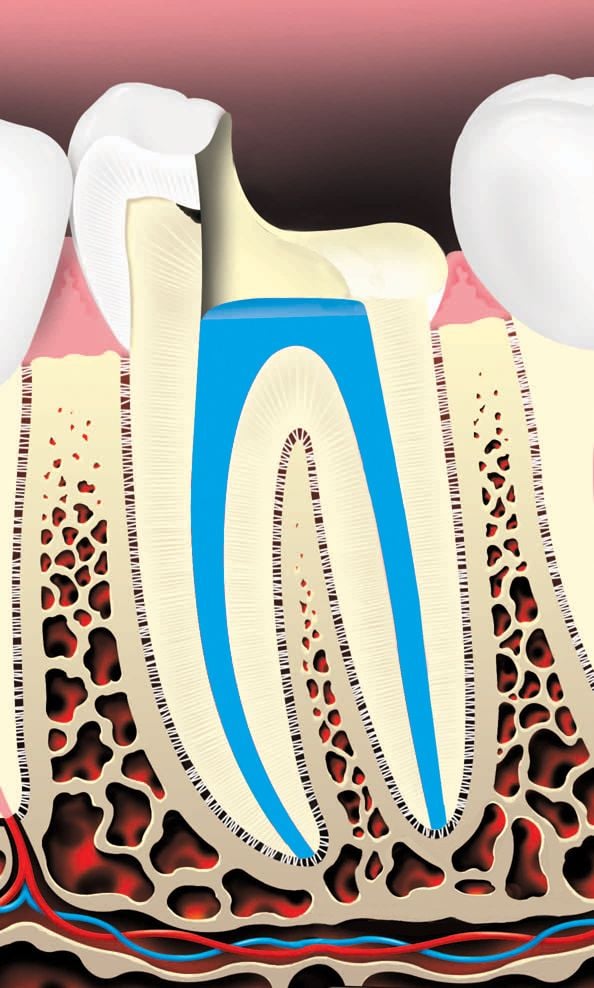
- First, your tooth is numbed for your comfort. A thin sheet of latex rubber is placed over your tooth to keep it dry. An opening is made through the crown of the tooth into the pulp chamber.
- The tooth’s nerve or pulp is removed from the pulp chamber and root canal (the space inside the root). Each root canal is cleaned and shaped so it can be filled.
- Your dentist may place medicine in the pulp chamber and root canal to help get rid of bacteria.
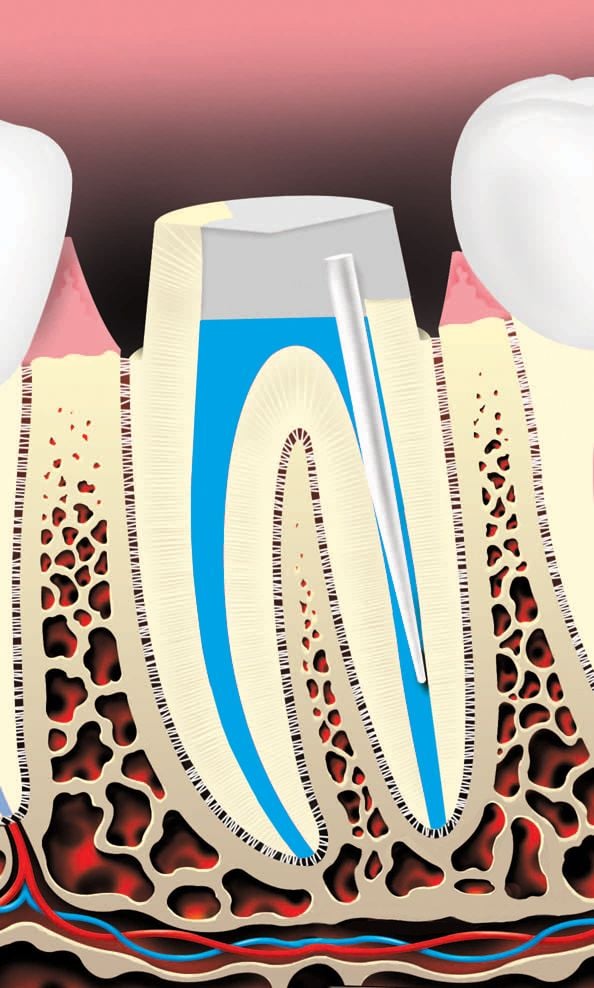
- The root canals are usually filled with a rubber-like material to seal them.
- A temporary filling is then placed in the tooth to prevent contamination of the root canals. You might be given antibiotics if the infection has spread beyond the end of the root(s). If your dentist prescribes medicine, use it only as directed. If you have any problems with the medicine, call your dentist.
- During the next stage of treatment, the dentist removes the temporary filling and restores the tooth with a crown or a filling to strengthen it and improve the way it looks. If an endodontist performs the root canal treatment, he or she usually recommends that you return to your general dentist for this step.
 |
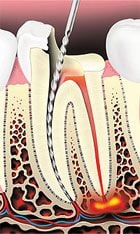 |
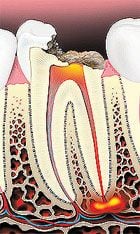
| Tooth decay can cause an abscess (infection). | The decay is removed and an opening is made through the crown of the tooth into the pulp chamber. |
 |
 |
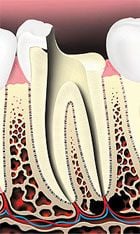
| The pulp is removed and the root canals are cleaned and shaped. | The root canals and pulp chamber are filled. |
 |
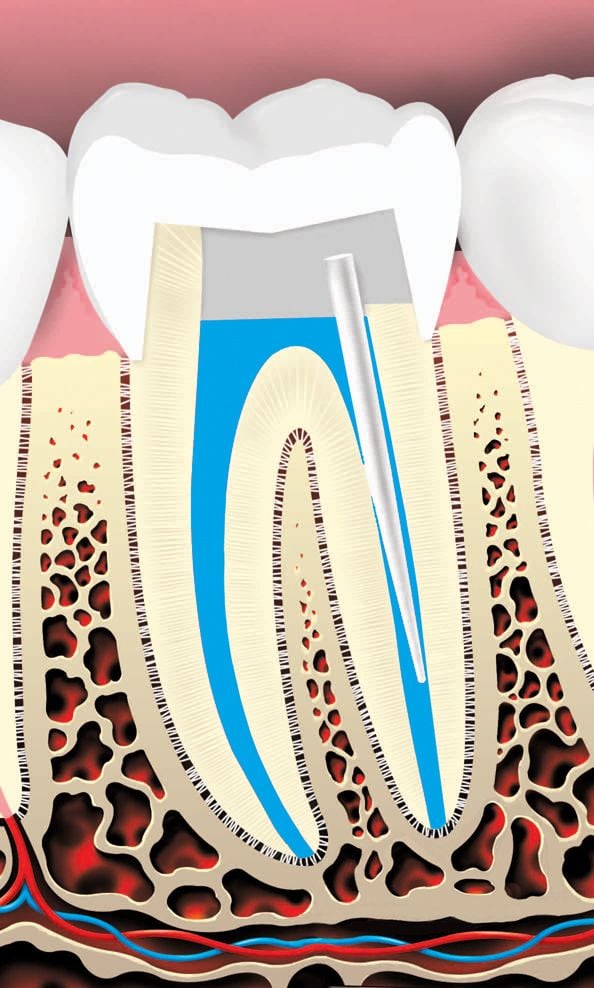 |
| A metal or plastic rod or post may be placed in the root canal to help retain the core (filling) material, which supports the restoration (crown). | The tooth is then restored with a crown or filling. |
How long will the restored tooth last?
When properly restored, a tooth with a root canal filling can last for many years. But, like any other tooth, it can become decayed or fractured or the tissue around it can get gum disease. Daily cleanings and regular dental exams will help keep your mouth healthy, whether you've had root canal treatment or not.

Patient education content ©2014 American Dental Association. All rights reserved. “ADA” and the “ADA” Logo are registered trademarks of the American Dental Association.