Wisdom Teeth
Wisdom teeth get their name because they are the last teeth to come in, at about the time of young adulthood - the age when a person gains maturity and wisdom. Most of our permanent (adult) teeth come in by age 13. A few years later, between ages 17-21, our wisdom teeth usually push their way through the gums.
When wisdom teeth come in that are healthy and properly positioned, they can be helpful. Sometimes wisdom teeth do not have enough room to come in normally, or they are in the wrong position. These wisdom teeth are called "impacted"" and may have to be removed.
Regular dental visits allow your dentist to track the progress and condition of your teeth. After doing an oral exam and taking X-rays, your dentist can evaluate your wisdom teeth and discuss whether or not they should be removed.
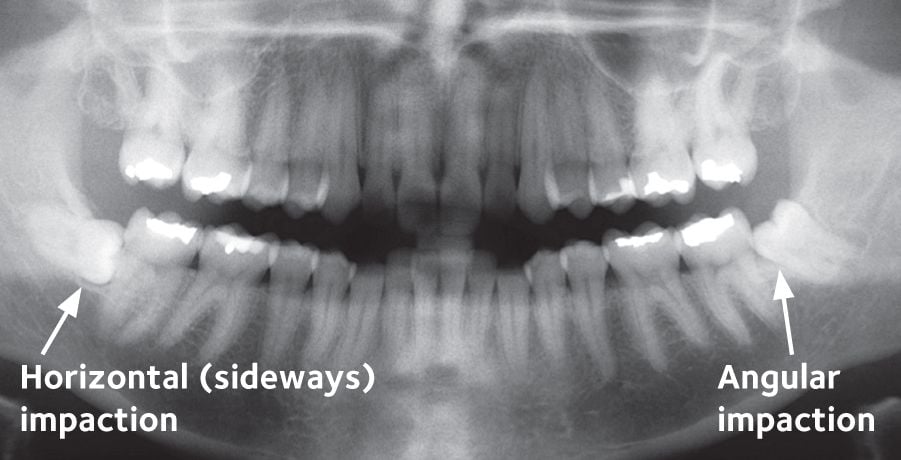
This X-ray shows two ways that wisdom teeth can be impacted. Radiograph courtesy of Brian A. McMurtry, DDS, FAGD.
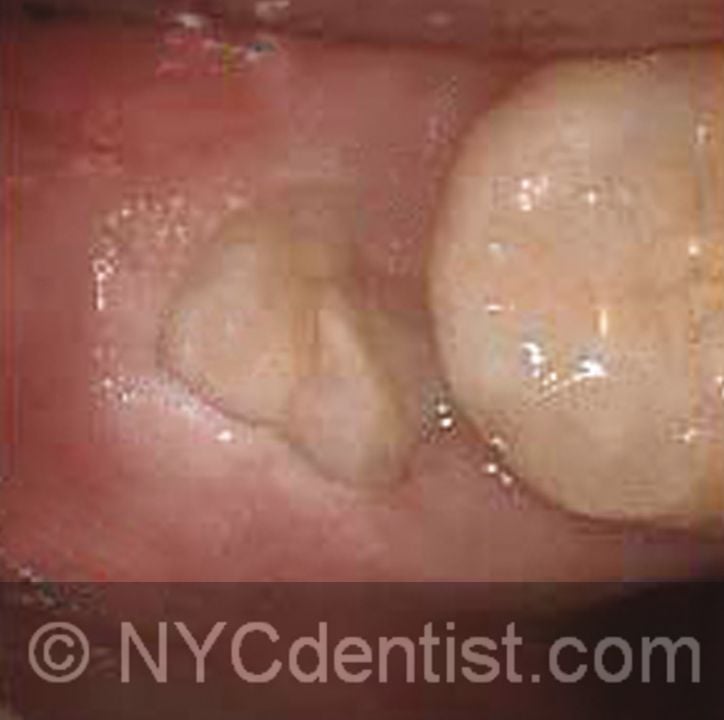
This photo shows an impacted tooth that has partially erupted, seen from above. Photo courtesy of Dr. Jeffrey Dorfman, www.NYCdentist.com.
Why and When are Wisdom Teeth Removed?
Wisdom teeth, also called third molars, are far back in the mouth. They often are not needed for chewing and are difficult to brush and floss. Your dentist may recommend the removal of your wisdom teeth in your late teens, because waiting until you are older can increase the risk of problems.
Removal of wisdom teeth can prevent these types of problems:
-
Infection can occur when a wisdom tooth partially erupts (comes in) through the gum and creates an opening where bacteria may enter. Pain, swelling and jaw stiffness may result.
-
Damage or crowding of adjacent teeth can be caused by a wisdom tooth without enough room in the jaw or one that is poorly aligned.
-
A fluid-filled sac (cyst) or tumor can form on or near an impacted tooth, destroying surrounding bone or tooth roots.
A general dentist can perform wisdom tooth extractions. However, if your dentist sees a need for any special care, you may be referred to an oral and maxillofacial surgeon. This is a dentist who specializes in surgery of the hard and soft tissues of the mouth, including the removal of impacted wisdom teeth. If your general dentist refers you to a specialist, the two will work together to provide you with the best and most efficient care.
What Can You Expect?
Before surgery:
-
Your dentist will explain what to expect and help you plan for the appointment. Advice will probably include dressing comfortably in loose clothing and perhaps arranging for someone to be with you after your dental visit.
-
Extractions are usually performed under local anesthesia. This means you stay "awake" but your mouth is numbed. Your dentist can discuss what types of anesthesia and pain- or anxiety-reducing medication are right for you.
-
Talk to your dentist about any questions you have about the procedure. He or she will also tell you how you can get advice after office hours if you have any problems after surgery.
-
Before surgery is scheduled, it's especially important to tell your dentist about past illnesses and current medications - both prescription and over-the-counter drugs.
Following surgery, you may experience:
-
Swelling and discomfort. These can be part of the normal healing process. Cold compresses can help reduce any swelling. Your dentist may also prescribe medicine to help relieve inflammation and discomfort. Your dentist will also advise you about your diet after your extraction. Sometimes you may be told to drink only clear liquids after the surgery until you can comfortably begin to eat soft foods.
-
Numbness or tingling in the face or jaw after surgery. Normal feeling usually returns within a few hours, after the anesthetic wears off. Sometimes it may take a few days for feeling to come back completely. Numbness that lingers for more than a few days is rare. If the area still feels numb after a few days, contact your dentist for follow up care.
-
Dry socket. This condition sometimes occurs when the blood clot over the tooth socket breaks down sooner than it should. If this happens, your dentist may place a special dressing in the socket to protect it as it heals. The main symptom is pain that gets worse over a few days instead of better. There may also be a bad taste or bad smell in your mouth. Contact your dentist if you notice these symptoms.
If your wisdom teeth are impacted, early removal can save you trouble and pain later in life. Not everyone's teeth develop on the same schedule. See your dentist regularly so he or she can monitor the progress of your wisdom teeth.

Patient education content ©2013 American Dental Association. All rights reserved. “ADA” and the “ADA” Logo are registered trademarks of the American Dental Association.